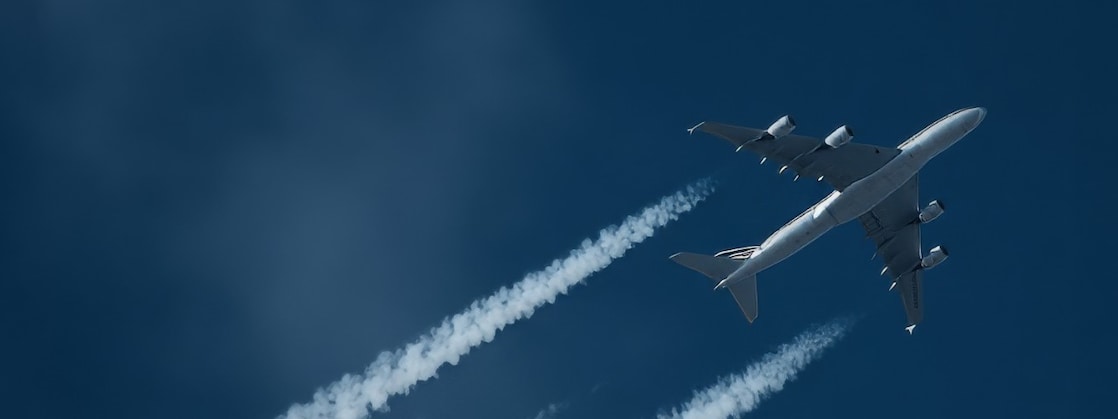
Zomervakantie met SAF? Wat is dat?
Vensters woord van de maand juli is strikt genomen geen woord, maar een acroniem. SAF staat voor Sustainable Aviation Fuel. Deze vliegtuigbrandstof, gemaakt van hernieuwbare ingrediënten, brengt vliegen met minder CO2-uitstoot dichterbij. Een prettige gedachte nietwaar, met de zomervakantie voor de deur.

Tekst: Matthijs Timmers. Beeld: Adobe Stock.
Zit SAF ook in je vakantievliegtuig?
Een piepklein beetje, in theorie dan. In Europa is afgesproken dat er vanaf dit jaar gemiddeld 2% van alle geleverde brandstof aan Europese vliegvelden uit Sustainable Aviaton Fuel moet bestaan. Gemiddeld. Dus in het ene vliegtuig zal meer zitten, in het andere misschien helemaal niets. Bij vliegtuigmaatschappijen betaal je een toeslag om ervoor de zorgen dat je in theorie op SAF vliegt. Van je extra bijdrage bovenop je ticket worden dan SAF-certificaten gekocht, waarmee het aandeel SAF in toekomstige vluchten toeneemt.
Gebeurt dit bijmengen alleen in de luchtvaart?
Nee. Ook bij benzine wordt een gedeelte (tot 10%) biobrandstof bijgemengd. Dat verplichte bijmengpercentage is in de luchtvaart nu lager. Maar internationale organisaties als de IATA of de EU kunnen die doelen alsnog bijstellen. Zo heeft in de scheepvaart de internationale maritieme organisatie IMO ambitieuzere doelen gesteld dan de EU.
Vliegen op SAF, zorgt dat voor minder CO2-uitstoot?
Gewone kerosine wordt gemaakt van aardolie. SAF bestaat uit restproducten, zoals frituurvet of landbouwafval. De CO2-belasting van deze biobrandstof over de gehele keten is daarmee een stuk lager, tussen de 50% en 80%. Dat komt doordat de hernieuwbare bronnen waaruit SAF is gemaakt – denk aan het rapsolieplantje of de steel van een maisplant – ook weer CO2 kunnen opnemen. Wat er tijdens het vliegen uit het toestel zelf komt aan broeikasgassen, daarin verschillen gewone kerosine en SAF echter niet.
Helpt SAF op weg naar een schonere luchtvaartsector?
Dat zeker, het is een stap naar een luchtvaartsector met minder blijvende uitstoot. SAF wordt gezien als een zogenoemde insetting-maatregel, een maatregel die in de eigen waardeketen wordt genomen om de CO2-uitstoot te verminderen. Dat is concreter dan zogenaamde offset-maatregelen, zoals investeren in natuurgebieden om CO2-uitstoot te compenseren, die uiteraard ook waardevol zijn.
Momenteel is het aandeel SAF in de luchtvaart laag. Ook is de prijs zo’n drie tot vijf keer hoger dan conventionele kerosine. Voor dit type vliegtuigbrandstof geldt dat er ambitieuze wettelijke verplichtingen nodig zijn om het aandeel harder te laten groeien. En dat is nodig, want de Nederlandse luchtvaartsector is verantwoordelijk voor 6,5% van onze totale CO2-uitstoot (in 2023). En 74% van de totale CO2-uitstoot van alle vakanties wordt veroorzaakt door vliegen.
Wat is de volgende stap in SAF?
De volgende stap is vliegen op synthetische kerosine, uiteindelijk de gewenste vorm van SAF. Dit is vliegtuigbrandstof gemaakt van (afgevangen) CO2, H2O en groene stroom. Doordat er bij het maken ervan net zo veel CO2 uit de lucht wordt onttrokken als dat er bij het gebruik ervan wordt uitgestoten, wordt vliegen CO2-neutraal. En echt duurzaam wordt het als alle drie de componenten hernieuwbaar zijn. Er zijn nog maar enkele proefvluchten op synthetische kerosine gemaakt. Het is op dit moment nog erg duur om synthetische kerosine te produceren.
Kun je al 100% op SAF vliegen?
Dat is mogelijk. Vliegtuigmaatschappijen experimenteren ermee. Zo vliegt KLM vanaf september op een aantal vluchten volledig met SAF. Als proef. Dit zijn vluchten naar Hamburg en Londen. Redelijk dichtbij dus. Dat komt goed uit, want biobrandstoffen hebben over het algemeen een iets lagere energetische waarde dan fossiele brandstoffen. Met andere woorden: je kunt er minder ver mee vliegen. Overigens zijn dit trajecten die, mocht je duurzamer willen reizen, ook te doen zijn met de trein.

Shell en luchtvaart
Shell levert niet alleen brandststof aan de luchtvaart. Shell Aviation is een toonaangevende leverancier van smeermiddelen voor de luchtvaart, met meer dan 100 jaar ervaring in de industrie. De producten gaan naar luchthavens, luchtvaartmaatschappijen en particuliere klanten zoals beheerders van bedrijfsvliegtuigen en vliegclubs. Daarnaast wordt bitumen van Shell gebruikt voor veel start-, landings- en taxibanen op de vliegvelden in de wereld, waaronder Schiphol, Londen-Heathrow, Dubai International en Hong Kong International. Op Rotterdam The Hague Airport steunt Shell de versnelde bijmenging van SAF.
Cautionary note
Cautionary note
The companies in which Shell plc directly and indirectly owns investments are separate legal entities. In this announcement “Shell”, “Shell Group” and “Group” are sometimes used for convenience where references are made to Shell plc and its subsidiaries in general. Likewise, the words “we”, “us” and “our” are also used to refer to Shell plc and its subsidiaries in general or to those who work for them. These terms are also used where no useful purpose is served by identifying the particular entity or entities. ‘‘Subsidiaries’’, “Shell subsidiaries” and “Shell companies” as used in this announcement refer to entities over which Shell plc either directly or indirectly has control. The term “joint venture”, “joint operations”, “joint arrangements”, and “associates” may also be used to refer to a commercial arrangement in which Shell has a direct or indirect ownership interest with one or more parties. The term “Shell interest” is used for convenience to indicate the direct and/or indirect ownership interest held by Shell in an entity or unincorporated joint arrangement, after exclusion of all third-party interest.
Forward-looking Statements
This announcement contains forward-looking statements (within the meaning of the U.S. Private Securities Litigation Reform Act of 1995) concerning the financial condition, results of operations and businesses of Shell. All statements other than statements of historical fact are, or may be deemed to be, forward-looking statements. Forward-looking statements are statements of future expectations that are based on management’s current expectations and assumptions and involve known and unknown risks and uncertainties that could cause actual results, performance or events to differ materially from those expressed or implied in these statements. Forward-looking statements include, among other things, statements concerning the potential exposure of Shell to market risks and statements expressing management’s expectations, beliefs, estimates, forecasts, projections and assumptions. These forward-looking statements are identified by their use of terms and phrases such as “aim”; “ambition”; ‘‘anticipate’’; ‘‘believe’’; “commit”; “commitment”; ‘‘could’’; ‘‘estimate’’; ‘‘expect’’; ‘‘goals’’; ‘‘intend’’; ‘‘may’’; “milestones”; ‘‘objectives’’; ‘‘outlook’’; ‘‘plan’’; ‘‘probably’’; ‘‘project’’; ‘‘risks’’; “schedule”; ‘‘seek’’; ‘‘should’’; ‘‘target’’; ‘‘will’’; “would” and similar terms and phrases. There are a number of factors that could affect the future operations of Shell and could cause those results to differ materially from those expressed in the forward-looking statements included in this announcement, including (without limitation): (a) price fluctuations in crude oil and natural gas; (b) changes in demand for Shell’s products; (c) currency fluctuations; (d) drilling and production results; (e) reserves estimates; (f) loss of market share and industry competition; (g) environmental and physical risks; (h) risks associated with the identification of suitable potential acquisition properties and targets, and successful negotiation and completion of such transactions; (i) the risk of doing business in developing countries and countries subject to international sanctions; (j) legislative, judicial, fiscal and regulatory developments including regulatory measures addressing climate change; (k) economic and financial market conditions in various countries and regions; (l) political risks, including the risks of expropriation and renegotiation of the terms of contracts with governmental entities, delays or advancements in the approval of projects and delays in the reimbursement for shared costs; (m) risks associated with the impact of pandemics, such as the COVID-19 (coronavirus) outbreak, regional conflicts, such as the Russia-Ukraine war, and a significant cybersecurity breach; and (n) changes in trading conditions. No assurance is provided that future dividend payments will match or exceed previous dividend payments. All forward-looking statements contained in this announcement are expressly qualified in their entirety by the cautionary statements contained or referred to in this section. Readers should not place undue reliance on forward-looking statements. Additional risk factors that may affect future results are contained in Shell plc’s Form 20-F for the year ended December 31, 2023 (available at www.shell.com/investors/news-and-filings/sec-filings.html and www.sec.gov). These risk factors also expressly qualify all forward-looking statements contained in this announcement and should be considered by the reader. Each forward-looking statement speaks only as of the date of this announcement, November 12, 2024. Neither Shell plc nor any of its subsidiaries undertake any obligation to publicly update or revise any forward-looking statement as a result of new information, future events or other information. In light of these risks, results could differ materially from those stated, implied or inferred from the forward-looking statements contained in this announcement.
Shell’s Net Carbon Intensity
Also, in this announcement we may refer to Shell’s “Net Carbon Intensity” (NCI), which includes Shell’s carbon emissions from the production of our energy products, our suppliers’ carbon emissions in supplying energy for that production and our customers’ carbon emissions associated with their use of the energy products we sell. Shell’s NCI also includes the emissions associated with the production and use of energy products produced by others which Shell purchases for resale. Shell only controls its own emissions. The use of the terms Shell’s “Net Carbon Intensity” or NCI are for convenience only and not intended to suggest these emissions are those of Shell plc or its subsidiaries.
Shell’s net-zero emissions target
Shell’s operating plan, outlook and budgets are forecasted for a ten-year period and are updated every year. They reflect the current economic environment and what we can reasonably expect to see over the next ten years. Accordingly, they reflect our Scope 1, Scope 2 and NCI targets over the next ten years. However, Shell’s operating plans cannot reflect our 2050 net-zero emissions target, as this target is currently outside our planning period. In the future, as society moves towards net-zero emissions, we expect Shell’s operating plans to reflect this movement. However, if society is not net zero in 2050, as of today, there would be significant risk that Shell may not meet this target.
Forward-looking non-GAAP measures
This announcement may contain certain forward-looking non-GAAP measures such as cash capital expenditure and divestments. We are unable to provide a reconciliation of these forward-looking non-GAAP measures to the most comparable GAAP financial measures because certain information needed to reconcile those non-GAAP measures to the most comparable GAAP financial measures is dependent on future events some of which are outside the control of Shell, such as oil and gas prices, interest rates and exchange rates. Moreover, estimating such GAAP measures with the required precision necessary to provide a meaningful reconciliation is extremely difficult and could not be accomplished without unreasonable effort. Non-GAAP measures in respect of future periods which cannot be reconciled to the most comparable GAAP financial measure are calculated in a manner which is consistent with the accounting policies applied in Shell plc’s consolidated financial statements.
The contents of websites referred to in this announcement do not form part of this announcement.
We may have used certain terms, such as resources, in this announcement that the United States Securities and Exchange Commission (SEC) strictly prohibits us from including in our filings with the SEC. Investors are urged to consider closely the disclosure in our Form 20-F, File No 1-32575, available on the SEC website www.sec.gov


